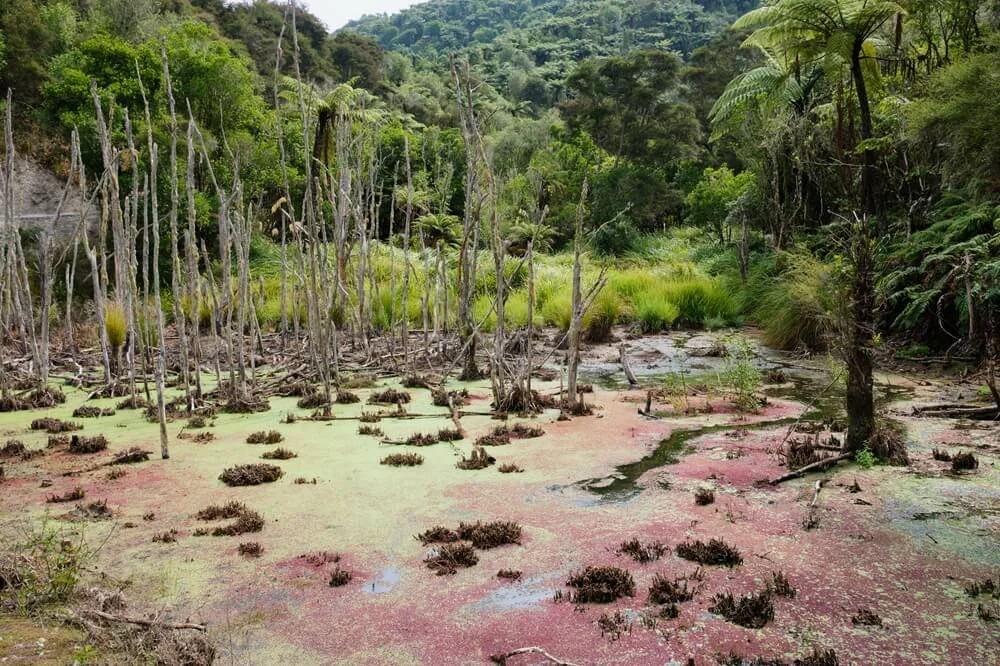
What: Lake Rotomahana
Where: North Island, NZ
Lake Rotomahana lies at the foot of Mount Tarawera, around 30 minutes south-east of Rotorua, in New Zealand's North Island. Surrounded by native bush and dramatic geothermal scenery, this remarkable lake has a fascinating history shaped by one of the country's most devastating volcanic eruptions.
Before 1886, Lake Rotomahana was much smaller and famous for its spectacular Pink and White Terraces. These enormous natural silica formations, created by mineral-rich geothermal waters, were considered the eighth wonder of the world and attracted visitors from across the globe. However, the eruption of Mount Tarawera on 10 June 1886 dramatically transformed the landscape, burying the terraces and expanding the lake to around 20 times its original size.
Today, Lake Rotomahana is the deepest lake in the Rotorua region and remains geothermally active. Steaming cliffs, hot springs and geysers line parts of its shoreline, offering a glimpse of the powerful volcanic forces still at work beneath the surface. The lake is also a protected wildlife refuge, providing a peaceful habitat for native birds and plants.
Visitors can explore Lake Rotomahana on a guided boat cruise through Waimangu Volcanic Valley, travelling across the historic sites of the lost terraces and past the lake's extraordinary geothermal features. Combining beautiful scenery with a remarkable story of destruction and regeneration, Lake Rotomahana is one of the North Island's most intriguing natural attractions.